Pages

  • Home
  • About
  • FAQ
  • Contact
Powered by Blogger.
twitter instagram pinterest facebook bloglovin gplus goodreads

Ivy Cirillo Books


Every now and then, I like to take a moment to introduce an author to all of you! With this interview series, I've come to know an amazing group of writers and I want you to know them too!

For today's installment, I've had the pleasure of interviewing author Sam Campbell! According to his website, he's a YA and a Multi-Genre author who specializes in "creepy and twisted."

Of course, I know we all want to know more than that! That's why I've sent him an in-depth questionnaire with 75 of the most intriguing questions I could come up with! And since Sam is an incredible interviewee, he took the time to answer almost all of them! So not only do we get one interview with Sam, but we actually get two!

Let's get started :)

About the Author:
  • Where are you from? Amherst, Virginia
  • Are you a full-time writer? If not, what else do you do? I do not write full-time (definitely the dream!!). I currently work as a talent recruitment manager for an international talent organization. Each year we hold a competition around the L.A. area for performers from all around the world (think of an international version of “America’s Got Talent”). It’s very exciting! I handle a lot of the paperwork and social media.
  • If you couldn’t be an author, what would your ideal career be? Why? I would love to be an actor. I’ve always loved film, both in front of and behind the camera. However, if THAT didn’t pan out, my ideal career would probably be a veterinarian. What can I say…I love the animals!!
  • What’s your favorite genre to read? Too tough to choose! Top two: YA horror and YA fantasy.
  • What’s your favorite book? Besides the entire Harry Potter series, probably Coraline by Neil Gaiman. That book still inspires me to this day.
  • Be honest, do you judge a book by its cover? Yes! I’m sorry. The saying is not true. 
  • Who has been your biggest inspiration so far? J.K. Rowling. Her personal story amazes me. I never get tired of hearing how she worked on Harry Potter during her darkest times in life, rose from the ashes of poverty, and connected with so many readers.
  • If you could tell your younger writer self anything, what would it be? Don’t try to copy another writer’s story just because it’s appealed to the masses. It’s already been done. Be unique. Write the story that’s inside you. Write what you love. Chances are, someone else will love it too. They’ll see the passion in your words.

About Being an Author:
  • When did you know that you wanted to be an author? I was 12. My aunt gave me an “illustrate-your-own-story” kit for Christmas that year because I was always the artsy kid. The kit contained about 10 pages. At the bottom of each page you wrote a few lines, and at the top you illustrated whatever was happening in the story below. Then you sent it off, the company bound it in a hardback, and shipped it back to you. I can still remember receiving the finished book in the mail…it was magical. The lightbulb went off that day. I realized I loved writing and creating stories!
  • Were you ever discouraged about pursuing your passion? If so, how’d you push past it? Each rejection letter was hard, some more than others. Sometimes you wait for months to hear back from an agent who is reading your manuscript – just knowing they’re going to sign with you – and then you receive the rejection. It’s tough! But I’ve always had a strong will, and I think that’s helped me persevere through the whole publishing process.
  • Does your family support your writing career? Definitely! They’re constantly praying over me and my writing. They know it’s my passion, and we all believe God has a perfect plan.
  • Is writing your passion or your hobby? Passion. I treat writing like it’s my JOB. I put a lot of sweat and tears into it!
  • What has been your best experience so far as an author? Apart from receiving my first hard copy in the mail (emotional day!), I would say the best experience has been receiving wonderful reviews and comments from people I’ve never met. They don’t owe me anything, so I know their praise for the book is genuine!
  • What does author success look like to you? Have you achieved it yet? I think there are many levels of success. Of course the big dream would be to have Doll House connect with millions of readers and be turned into a film. However, I see my current success as simply being published and having my work out in the world. That’s a huge milestone that I’ve crossed, and I’m so thankful!

About Your Book:
  • What gave you the ideas for your most recent work? I wish I had a great answer here, like I had a magical dream one night and the story just came to me. Truth is, I don’t know! My family was without power for an entire week during the summer of 2012. It was 110 degrees outside, so you couldn’t go out. We were all cooped up in the house, and I was super bored. I just remember pulling out my laptop and starting to type this story about a girl who goes to this orphanage and uncovers a dark secret. A+ for boredom I guess!
  • What inspired your novel’s cover? I always pictured Crummings’ Home for the Dispossessed (the orphanage) as this giant, gothic building. One day I drove past this old church and snapped a picture – it was exactly what I pictured the orphanage to look like! So of course that had to be on the cover. There’s just this dark, mysterious quality about it.
  • What was the hardest part of finishing your novel? Editing. I could edit until the cows came home. I’m a bit of a perfectionist, so I was constantly changing things. Finally I had to just close the laptop and tell myself it was finished. No more editing. That was the hard part: Just knowing I couldn’t make any more changes and it was out there for the world to see.
  • Is your book a part of a series? If so, can you give us a little preview of something that’s ahead? Right now, there are no plans for a series. However, I am working on a prequel to Doll House. I’m very excited about this project!! 
  • Which formats are available for your books? Paperback and ebook.

About Your Writing:
  • What’s your favorite genre to write? MG/YA horror, fantasy, mystery (Can they all be lumped together??)
  • What’s one genre that you secretly want to write? Dystopian. I’d love to create an awesome world, something that hasn’t been overdone.
  • Where do you get your big ideas? My random thoughts.
  • Did any of your books stem from dreams? No.
  • How do you come up with the names for your characters? Some come naturally, others are just a mix of fun names I like. But they always have to compliment the character’s personality.
  • Who’s your favorite character you’ve created so far? Why? Definitely Emma. I’ve spent 5 years with her now, and she feels like an old friend. Plus, I admire her courage and tender heart.
  • If you could spend time with one of your characters, who would it be and why? Again, probably Emma. Both our sarcasms would make for a great conversation!

About the Process:
  • What is your writing process like? It takes me forever to get that first draft down, mainly because I’m guilty of editing as I write. (The perfectionist inside me makes me. I try not to!) Once I get that first draft down, I try to divide the manuscript into chapters. Then I spend the rest of the time editing, editing, editing!
  • Is there any part of the process you wish you could delegate to someone else? Editing. I stress myself out doing it!
  • What’s your favorite part of the writing process? The first draft. I don’t outline, so it’s so much fun to just discover the story as I write. Sometimes I don’t know what’s next! It’s an adventure.
  • Are you a planner or a pantser? Definitely a pantser.
  • Writers block, how do you cope with it? Workout. Watch author interviews on YouTube. Go eat.

Share
Tweet
Pin
Share
No comments

I promised I’d be back, and here I am. In the first part of this I went through the creative process behind creating a book cover. The steps and thought processes involved in what makes a good cover. It’s a good starting point for how to conceive the outside for your hard labor.

If you missed the first instillation of this series, you can check it out here.

Now, let’s get technical.

When you write, it’s not all creative. There are just as many technical aspects behind what you write as what you think. On a smaller scale you have sentence structure, punctuation, and pretty much every aspect of grammar. Then, on the larger scale, there is character development, tone, and all the other elements of storytelling. If you know how to put all that together, then you have the means to create a novel.

And you also have the means to create the actual book. Unlike the first part of this series, which put everything on a mental level, this one involves other tools. For a professional designer, those tools likely come from Adobe, but you don’t have to have a subscription to Creative Cloud to produce a book. Most word processors have options to output a press-ready file to varying degrees. Do a little research on the what and how of what you own. Learn those tools. I’m not able to tell you how they work. I’m just going to give you pointers on what to do with them.

Let’s work from the inside out.

The interior of the book is the actual structure of the novel. Like sentence structure, you have to build it in a logical manner that is clear and easy to understand. It might look intimidating, but you need to break it down to its most simple form: a page. Don’t think of it as building a whole book. You are putting together a page. Just like you take one sentence and add those together to create your novel, taking the pages one at a time add up to a whole book. Like a sentence, a page has structure. The subject of the page is called the live area or body. It’s the heart of the layout and where you put all of your novel’s text.

From a sentence structure perspective, the area around that is the predicate. It’s what creates the action by focusing the eye on the subject. Designers call the part towards the spine the gutter, and the part on the outside, top, and bottom is the margin. You need to keep enough margin so that the body of your book is clear of the edge. Your word processing program likely has pre-set margins for a page. These are generally meant for printing out on a 8.5” x 11” piece of paper. You will need to adjust them for the printing press so that the on odd numbered pages, there is a larger margin on the left-hand side of the page, and on even numbers, you move that to the right. There is probably a setting for this in your program. Look for a tutorial on that specific program and put it to use. Note: if you are laying out for an ebook, this isn’t as important. Margins for an ebook are the same on all four sides of the page.

The last part you need to worry about for the internal layout of your book is punctuation. For layout, this is going to be your font choice and paragraph formatting. While you can probably name a half-dozen fonts already, there are only two types of fonts you need to concern yourself with: serif and sans-serif. Those fonts that have a little “tail” on the letters are called serif fonts. Which makes the ones without those “tails” to be the sans-serif ones. The rule here is pretty simple. If you are doing the book for print, use a serif font. Research shows that reading serif fonts on paper is easier. For an ebook, it’s the opposite. Use a sans-serif font, for the exact same reason—research says it’s easier to read.

Paragraph formatting is a little trickier. You’ve likely seen the line-spacing option on your word processing program. Generally that’s listed as single, double, etc. In a design sense that is called leading (pronounced led-ing, by the way). I’m going to go back to story structure to describe this one. You can’t have a book where the only thing that happens is a fight scene. Three hundred pages of fight scene will appeal to no one. Even if that is the core of the story, you have to give the fight scene some room to breathe. Do the same with your paragraphs. Let them breathe. And not just the lines of the paragraph itself, but allow for a little extra space between the paragraphs. The one other thing I want to touch on for the paragraphs is the alignment. For print, you will want to use left-aligned text. That’s the text that looks like it has a jagged edge on the right-hand side, but everything is straight on the left. For ebooks, use justified text. That’s where the text lines up not only on the left, but also on the right.

Now, I’m going to go outside and touch on the cover for just a moment. There are three parts to the cover of a book: the front cover, the back cover, and the spine. The two biggest things that you need to keep in mind from a technical point of view correlate to character development and tone. The character development of your cover is, once again, the font. This is what will give a tone to your book just by reading the title. A font that drips blood screams horror. A font that looks like it is made of metal makes you think it’s science-fiction. Hand script fonts are romance. Choose a font that tells people what they need to know before they open the book. This, however, isn’t the important part. When you build a character, you want people to understand the character—even if they are supposed to understand that the character is impossible to understand. Which, in a design sense, means, above everything else, make the font readable. It doesn’t matter how cool you think the font looks, if it isn’t instantly recognizable it fails. People don’t linger. They move quickly. You have two seconds to get them. Use it wisely.

Now, to that end, the tone of your book is color theory. How you set up the cover and move it along is the tone, and nothing does that more than color. Colors are associated with emotion. Blue is calm. Red is anger. Purple is mysterious. Yellow is happy. Use these colors to set up the initial impression of the book, but also the underlying tone. Color theory is the way that colors interact with each other. So use those colors in the right combinations. Complementary colors stand out from each other, and will create a more shocking effect. These are the colors that are opposite each other on a color wheel. Analogous colors are ones that are next to each other on the color wheels and they create a more subtle feel. Let those colors set the tone of your whole book.

There’s a lot more to it, but hopefully just looking at the pages in a new way will help. I will say again, you can do this yourself. If it gets overwhelming, however, get help. There are plenty of people who will give you free advice and help. And if that doesn’t prove to be enough, hire someone. At the very least you should be able to give those designers a little direction.
Share
Tweet
Pin
Share
No comments
Newer Posts
Older Posts

About me


About [span]me[/span]

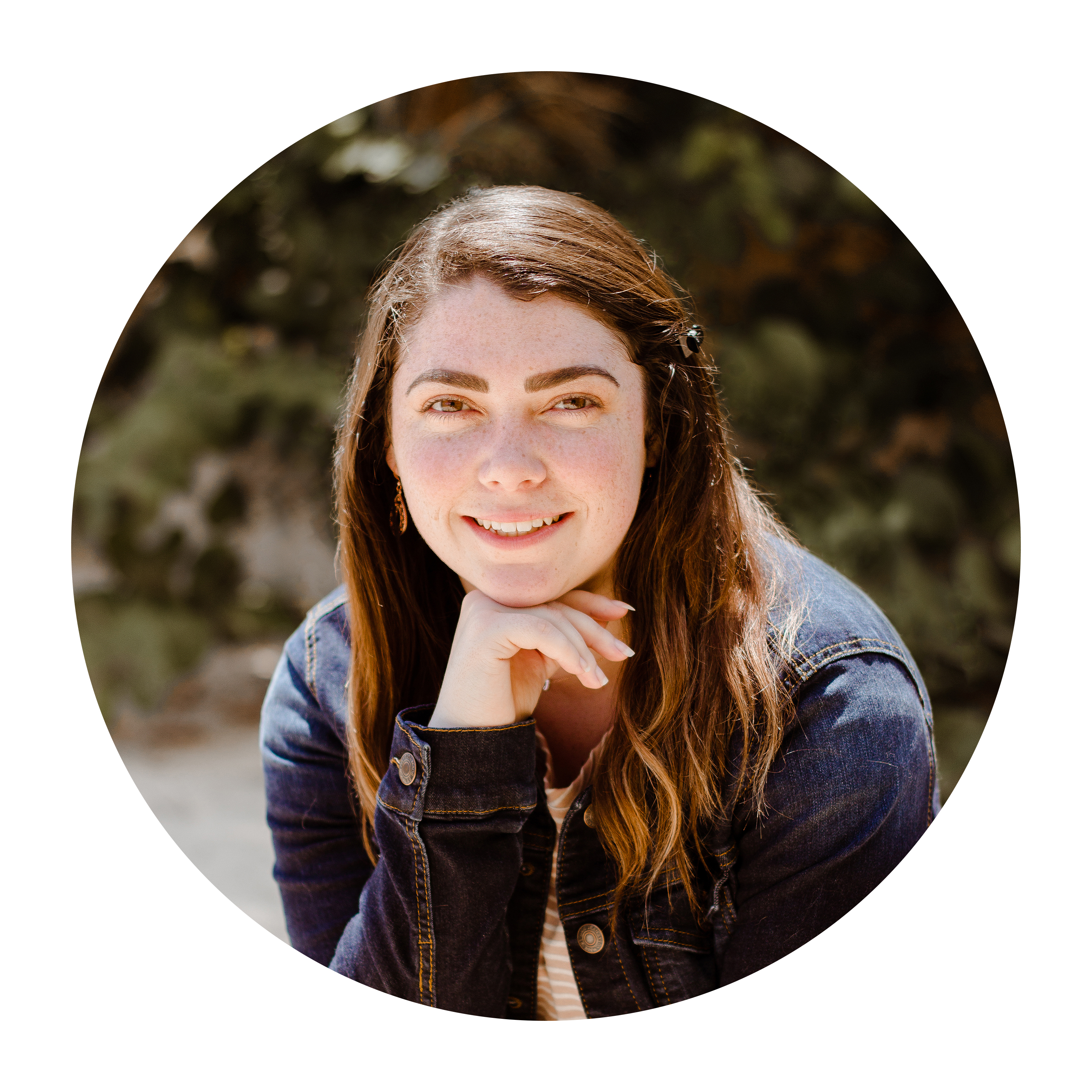
Hi, my name is Ivy!

I'm an avid reader and an emerging author. I've always been drawn to the young adult genre and I've decided to try my hand at writing my own novel or five!

Follow

Follow Us

  • twitter
  • instagram
  • pinterest
  • facebook
  • bloglovin
  • gplus

Popular Posts

  • Upcoming Anthology | Official Call for Submissions
    The time is here! I can't believe it, but this is the official announcement for my chronic illness anthology! Aren't you excited?...
  • 12 Subscription Boxes for Bookworms That I Want for Myself!
    Nowadays, it seems like there's a subscription box for everything! I mean, you can find them for fashion, food, fitness, and so muc...
  • 101 Blog Post Ideas for Writers: Number 2
    One of the reasons that I debated starting this website was because I wasn't sure what I would write about. I was too scared to post...

Search This Blog

Categories

101 Blog Post Ideas book hauls book reviews cover reveals freebies giveaways guest posts reading challenges reading logs sneak peeks sponsored posts weekly recaps

Blog Archive

  • ▼  2018 (1)
    • ▼  September (1)
      • Author Interview: Denise Walker - Part 2
  • ►  2017 (50)
    • ►  October (1)
    • ►  September (1)
    • ►  August (1)
    • ►  July (1)
    • ►  June (2)
    • ►  May (1)
    • ►  April (8)
    • ►  March (13)
    • ►  February (10)
    • ►  January (12)
  • ►  2016 (9)
    • ►  December (3)
    • ►  October (2)
    • ►  September (4)
instagram twitter pinterest facebook gplus goodreads

Created with by ThemeXpose